The Vietnam War. How U.S.A. lost the war?
The Vietnam War
The main events during the Vietnam War.

Reasons for US involvement in Vietnam
Vietnam is a country in south-east Asia. There were a number of long-term and short-term reasons to explain why the USA became involved in Vietnam in the late 1950s.
Reason one - Vietnamese independence
Before World War Two Vietnam had been part of the French Empire.
During World War Two it had been invaded by Japan. Ho Chi Minh was the leader of the Vietminh, a resistance army which fought for Vietnamese independence.
After World War Two Ho Chi Minh captured Hanoi in 1945 and declared Vietnam independent. The French tried to take control again, but this was unpopular with the people. They were defeated by the Vietminh at Dien Bien Phu in 1954.
Peace was discussed at Geneva in 1954 and the Treaty of Geneva agreed that the French would leave Vietnam and the country would be split along the 17th Parallel until elections could be held.
The elections were never held and the country remained divided:
- North Vietnam was a communist republic led by Ho Chi Minh.
- South Vietnam was a capitalist republic led by Ngo Dinh Diem.
Reason two - Civil war
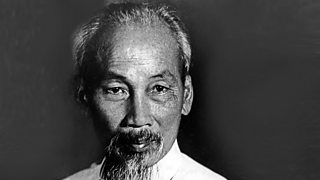
The Vietminh wanted to unite the country under communist leader Ho Chi Minh. Many of the South Vietnamese people supported Ho Chi Minh as they were unhappy with Ngo Dinh Diem.
War broke out between the North and South. From 1958 onwards, the South came under increasing attacks from communists in South Vietnam itself. They were called the National Liberation Front (NLF).
Reason three - The Domino Theory
This was the belief that if one country fell to communism, it was likely that the neighbouring one would also fall – similar to a row of dominoes falling over. This had happened in Eastern Europe after 1945. China had become communist in 1949 and communists were in control of North Vietnam.
The USA was afraid that communism would spread to South Vietnam and then the rest of Asia. It decided to send money, supplies and military advisers to help the South Vietnamese Government.
Reason four - The weak South Vietnamese Government
Diem was a corrupt leader who refused to give peasants land. He did not like Buddhism and treated the mainly Buddhist population badly. As a result, much of South Vietnam’s population was rebelling against him. The peasants wanted communism and supported the Vietminh and the NLF.
In 1963, President John F Kennedy sent 16,000 military ‘advisers’ to help the South Vietnamese army. Diem’s Government was overthrown. After this, there was no strong capitalist government in control of the South.
Reason five - The Gulf of Tonkin Incident 1964
The North Vietnamese attacked the US Navy in the Gulf of Tonkin. This incident gave the USA the excuse it needed to escalate the war.
Gulf of Tonkin Resolution - US Congress gave President Lyndon Johnson permission to wage war on North Vietnam. The first major contingent of US Marines arrived in 1965.
For the next ten years the USA's involvement increased. By 1968 over half a million American troops were in Vietnam and the war was costing $77 billion a year.
Reasons for US failure in defeating the Vietcong
The USA was not able to defeat the Vietcong (a term used to describe any Vietnamese person supporting communism and the North) for a number of reasons:
Unpopular American military tactics
The Americans tried to win the war from the air. Their tactics were brutal. As a result of this brutality and lack of sensitivity, they turned the Vietnamese people against them.
Operation Trail Dust 1961
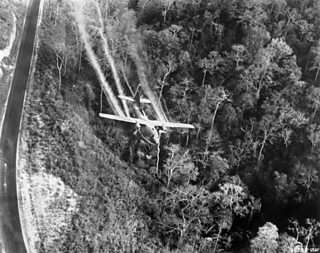
The Americans used chemical weapons Napalm (jellied petrol) and Agent Orange (superior strength weed killer). This was used to clear foliage in the jungle which was the natural hiding place for the Vietcong. They also wanted to see along the Ho Chi Minh Trail, the Vietcong’s supply route.
Napalm did clear much of the undergrowth but it also stuck to humans and caused horrific injuries. Agent Orange also cleared the foliage but many innocent civilians’ farms and crops were lost, and animals were killed.
Strategic hamlets 1962
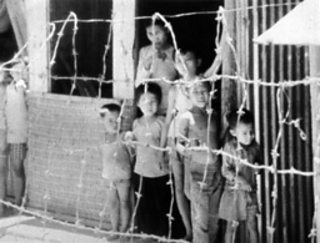
To prevent the Vietcong from hiding in southern villages, the South Vietnamese peasants were taken from their villages and settled in ‘strategic hamlets’. These were surrounded by barbed wire and controlled by the Americans. The peasants were opposed to this as they were far from their ancestral burial grounds and their farms, which they had tended for generations.
Operation Rolling Thunder 1965-1968
The Amercians bombed strategic targets in North Vietnam to stop the supply of troops and weapons to the South. There were not many industrial targets in the North so this was ineffective - bombs often missed targets and hit schools and hospitals.
Search and destroy missions
Working on intelligence, the Americans tried to weed out the Vietcong in the Southern hamlets. They would drop in by helicopter and kill those they thought were Vietcong. Many innocent civilians were killed. In 1968, a mission to the village of My Lai ended with the massacre of many innocent civilians, including women and children.
Vietnamese civilians were constantly caught in the crossfire and began to question whether the US army was really on their side. US troops became very unpopular.
Vietcong military tactics
Despite having no aircraft, tanks or artillery of their own, the Vietcong managed to hold out against the Americans until the USA left Vietnam in the 1970s. The Vietcong used a number of tactics to help them do this.
Guerrilla warfare
Guerrilla warfare is the art of using knowledge of the landscape to avoid open battle with the enemy and to launch raids and surprise attacks, before disappearing back into the undergrowth.
The Vietcong had experience of doing this while fighting the Japanese and the French after World War Two - they were very familiar with the terrain and the climate. They used the Ho Chi Minh Trail, which stretched from North Vietnam to the South, to keep their forces supplied.
Support from peasants
The Vietcong won the ‘hearts and minds’ of the South Vietnamese peasants. They would offer to help them in their daily work and also promised them land, more wealth and freedom under Ho Chi Minh and the communists.
It was difficult for American troops to know who was a Vietcong and who was not.
Tunnel systems and traps
The Vietcong had a hidden system of tunnels stretching over 200 miles. There were hospitals, armouries, sleeping quarters, kitchens and wells underground. These tunnel systems could hide thousands of Vietcong which helped them fight their guerrilla war.
It would be the job of US ‘tunnel rats’ to search these tunnels. However, they were often booby-trapped with spikes and grenades.
Foreign support
The Vietcong and North Vietnam were supported by the Soviet Union (USSR) and China who supplied money and weapons.
The Tet Offensive 1968
On January 31 1968, the Vietcong changed tactics from their usual guerilla warfare strategy. During celebrations of the Vietnamese New Year (known as Tet) North Vietnam, supported by South Vietnamese Vietcong launched a number of surprise assaults on towns and cities in US-held areas of South Vietnam. They took control of parts of Saigon and other cities, having most success in Vietnam's ancient capital, Hue. One group managed to blow a hole in the walls around the US Embassy in Saigon.
The Vietcong did not hold onto any of the territory gained for long. They suffered many casualites and the Tet Offensive was a military defeat for them.
The offensive failed but has been viewed as a turning point. It had two important effects:
- The loss of life of American soldiers, the determination and ferocity of the Vietcong assault, and coverage of the brutal response (including the capture on camera of a suspected Vietcong officer being executed in a Saigong street) led many Americans to conclude that they could not win a war against such a dedicated and widespread enemy. It would take more damage to civilians and American forces than the USA was prepared to withstand.
- President Johnson stopped bombing North Vietnam in return for peace talks in Paris.
Changing views of the war in the USA
Another major reason why the USA could not win the war was the lack of support at home from the American public. The huge protest movement divided the country. A major pro–war movement also erupted. Many veterans of the war called the anti–war protesters traitors and communists.
Opposition to the war came from a number of sources and for a number of reasons
Media coverage
This was the first televised war. It was vividly reported by journalists who went to Vietnam in search of stories. Images of innocent civilians being killed, maimed and tortured were displayed on the TV and in newspapers - many Americans were horrified and turned against the war.
Opposition to support for the South Vietnamese Government
The South Vietnamese Government, which the Americans were committed to defending was revealed as corrupt and anti–democratic.
Many Americans questioned how the American Government could justify standing up for this oppressive regime. The USA was meant to fight to protect freedom and democracy.
It became clear that the Vietnamese peasants did not welcome American troops. Many Americans questioned why their country was involved if the local population did not want them there.
Opposition to the 'Draft'
The 'Draft' was the conscription of American men into the US army and lasted from 1954-1975. As sons, brothers and fathers went to war, people began to question whether it was worth it. Draft Law hit African Americans hardest.
Many middle-class Americans opposed the war because, by 1967, the death rate had increased to 160 per week.
Opposition from Civil Rights Movement
There was opposition to the war from civil rights activists, who were fighting for more rights for African-Americans in the USA. Many African-Americans were drafted and because they were new recruits, they were often given the worst postings and assignments. Muhammad Ali had his boxing title revoked for refusing to fight in the war.
Opposition from youth
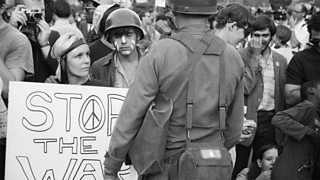
The main opposition came from students. In the 1960s, protest movements began in California but spread to all the major cities and universities across the USA by 1968.
On 4 May 1970, four peaceful student demonstrators at Kent State University in Ohio were murdered. They were shot by Ohio National Guardsmen during a noon-time campus anti-war rally - this became known at the Kent State Massacre.
Pacifists
Many believed that war was morally wrong. There were mass protests across the USA, including in Washington in December 1969.
Singers wrote anti-war songs and songs that criticised the Vietnam War itself. Bob Dylan wrote 'Masters of War' and John Lennon wrote 'Give Peace A Chance'.
Political opposition
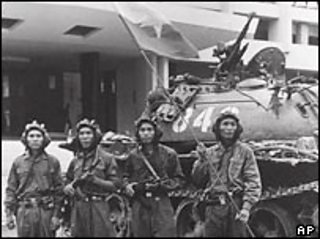
The American Government spent vast amounts of money on the war that could have been spent on domestic problems. Some politicians who had supported the war to begin with, such as Robert McNamara, began to turn against American involvement.
The end of the war in Vietnam
The resignation of President Nixon also weakened US enthusiasm for involvement in Vietnam.
In 1975, the North Vietnamese launched a major offensive and over-ran a series of South Vietnamese strongholds. In May 1975 communist forces took Saigon. In 1976 the two halves of Vietnam were united in a single Socialist Republic.
The Vietnam War was the greatest struggle of the Cold War era and the only major military defeat in United States history.
Impact of the war
Vietnam
- Approximately 500,000 civilians died.
- Agent Orange caused birth defects in children and this chemical continues to have a negative effect on Vietnam.
- The country was reunified after the communist takeover of the South in 1976.
- Before the war, Vietnam had been a major rice exporter. The destruction of land during the war meant that the country could not produce enough food for the population.
- Many skilled and professional workers connected to the South Vietnamese regime left the country in fear of being persecuted.
- The communist forces established concentration camps for enemies of communism and supporters of the South Vietnamese Government, where many were sent to be ‘re-educated’.
USA
Across the world, the USA'S reputation had been tarnished. It was criticised for supporting a corrupt government and the media had shown the world how brutal American tactics were.
Approximately 58,000 American soldiers were killed and another 153,000 were wounded.
During the Vietnam War, the USA spent $828 billion on its military. From 1965, it was spending more than $50 billion per year. The additional spending to fund the USA's involvement in Vietnam has been estimated at $111 billion.
Psychological effects
- Over 100,000 US troops lost limbs in the war and required treatment.
- ‘Draft dodgers’ were treated badly and some fled the country.
- American troops returning from the war were also subject to ill-treatment. Many civilians treated them as brutal thugs who should be punished or avoided.
- The fact that the USA, the great superpower, had lost to a much smaller and less powerful country was greatly demoralising. There was a loss of confidence in American military abilities.
Impact on international relations
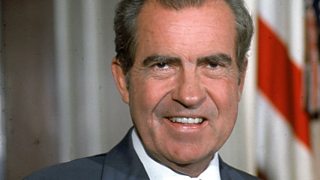
President Richard Nixon sought to reach a reduction of tension with the USSR in an attempt to divide the two communist superpowers in their support of North Vietnam. Both the USA and the USSR tried to distance themselves from China.
The Nixon Doctrine
Nixon announced that the USA would not make any more military commitments. Its allies would have to take care of their own security.
The Domino Theory (only partly confirmed)
Communism had spread to North Korea in 1948 and China in 1949. Laos and Cambodia had also become communist after 1975, but it did not spread into the rest of South East Asia as was feared.
Although Eastern Europe had become communist after the war, it had not spread to Western Europe. However, there were large communist parties in many European countries, so the threat was ever-present.
It was shown that communism may have spread to neighbouring countries but this outcome was not guaranteed.


Comments
Post a Comment